
By Linda Rodriguez
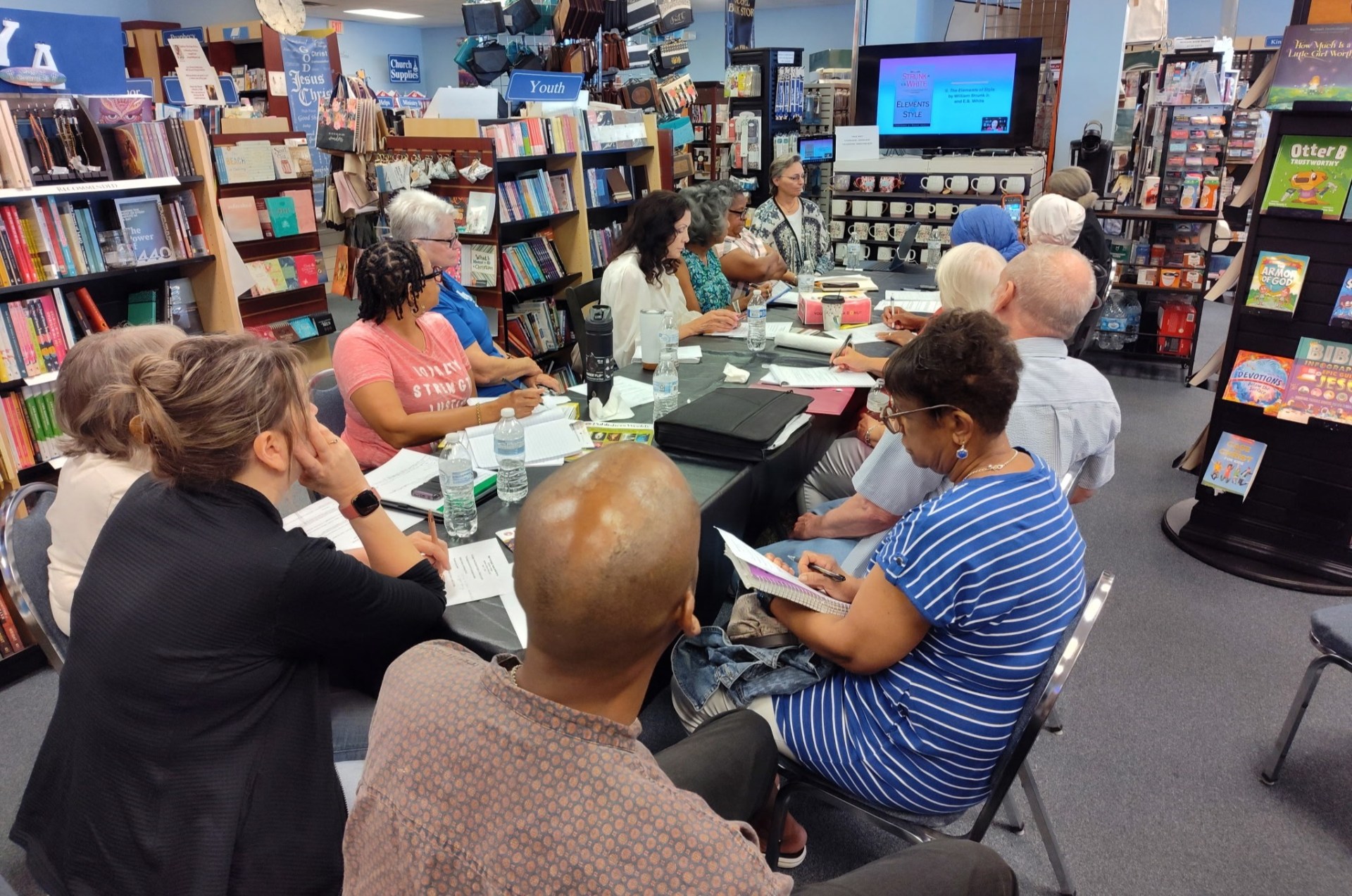
Our last writer’s group meeting had quite the twist. After Carla shared her story of learning to forgive an overbearing and antagonistic co-worker, a guest at the meeting spoke up and said, “That is exactly what I’m going through right now! Now I know why I came today!” She elaborated on her situation and how Carla’s experience paralleled her own. Carla’s devotional about forgiveness encouraged her, and she intended to go back to work and respond as Carla had.
Later, Ingrid shared her poem about dressing the part for what you’re enduring—that is, putting on grace and a smile in every situation. Our guest jumped in again. “God is speaking to me again!” she declared. “This is exactly what I needed to hear!”
The whole table smiled. We realized that our writer’s group had taken a divine turn, with the presence of God now among us. Carla’s devotional and Ingrid’s poem both resonated with our visitor’s current experiences. She was not there by accident. This was clearly the providence of God.
At the start of the meeting, Rosemary had posed a question that all writers should ask themselves when promoting their work: What unique qualification do I have to write in my chosen genre? I thought about that question as I watched the way this month’s meeting progressed.
As Christian writers, we all want our work to have a certain effect on the reader or listener—hopefully an effect that leads to a deeper, more spiritual understanding of God and his ways. We want our experiences to resonate in someone else so that they will see, and perhaps feel, what we did. Yet no one in our meeting could have predicted that our shared writings would land so powerfully upon this one visitor.
We are a varied group of writers: some write poetry, some write science fiction, some write devotionals, but we all approach our writing from a Christian perspective. If we write technical specs or educational manuals, we would surely need qualifications. If we write science fiction, teen novels, or historical fiction, we need qualifications, too. But when we write about our experiences with God, our qualification comes from a first-person, subjective experience. In other words, we know it firsthand because we lived it, and we are qualified because it was a real experience to us.
We may or may not have other callings in the Body of Christ—teacher, pastor, worship leader—but we are all called to be witnesses. We have a calling to share with others what God has done in us. Jesus said it plainly in Matthew 5:16: “Let your light so shine before men, that they may see your good works, and glorify your Father which is in heaven.” Writing and sharing the stories of what God has done for us shines a light back on the Father himself.
The apostle John, in his first epistle, was careful to explain the qualification for his message. After establishing that he had been an eyewitness of Jesus’ life and ministry, he wrote, “That which we have seen and heard declare we unto you, that ye also may have fellowship with us” (1 John 1:3a). He then added the result: “And these things we write unto you, that your joy may be full” (1 John 1:4). Writing and sharing our experiences with God fills our listeners with joy.
This effect was displayed in our visitor’s response at the writer’s group. She was filled with joy when she realized what God had done for others and what he could do in her own life and circumstances. That morning, no pastor had to preach, no altar call was made, but the Word of God was alive and resonant among us. It lived in the words of our papers, born of the experiences we’d had with God, and the glory reflected back to our heavenly Father.
As Christian writers, we each have the calling to be a witness. We have qualifications based on our firsthand experiences with the power and truth of God. Of course, we also have the responsibility to scripturally align our writing so that we “rightly handle the Word of God.” Once presented—whether we submit our writing for publication or read it aloud at a writer’s group—only God knows how far the results may spread.

Leave a Reply