
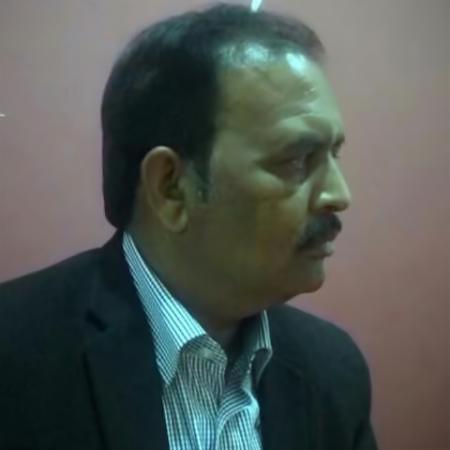
By Dr. Emanuel Adil Ghouri
In the recent elections for mayor of New York, a major city in the United States, a young Muslim named Zahran Mamdani achieved a historic victory—even though U.S. President Donald Trump, a resident of New York, opposed his candidacy. Not only the president but many other billionaire capitalists were also against him. Despite this, the fact that this young man succeeded in the election shows that true democracy exists there and that force is not used to suppress anyone politically.
Article 3, Section IV of the U.S. Constitution clearly states that no religious qualification shall be required for any public office or position of trust. There is no requirement to be a Christian, Muslim, Hindu, or Jew to be elected mayor.
Mamdani’s becoming mayor in the United States is not politically unique. Before him, Abdullah Hussein Hamoud (Arabic: عبدالله حُسَيْن حمود), an American politician, has served as the seventh mayor of Dearborn, Michigan, since 2022.
The Pakistani public and media are calling Mamdani’s success a “Muslim victory” in daily talk shows and news headlines. In my opinion, this is not a victory for any person or religion but rather a victory for a manifesto that expresses the needs and aspirations of the local people. It is a victory for true democracy, transparent elections, a democracy free from religious bias, and interfaith harmony. A clear example of this occurred halfway through Zahran Mamdani’s final campaign rally in Queens on October 26, 2025, when a Jewish rabbi, a mosque imam, and a priest took turns praising the Democratic Socialist Mamdani in their speeches and praying for his success.
In this city of 6 million people, the largest group is Christians, followed by Jews, with Muslims in third place. According to the AP Voter Poll, about 4 percent of New York voters are Muslim. Of these, 3 percent supported Mamdani.
Mamdani’s support was particularly high among voters with no religious affiliation (75 percent) and those who identify with “other religions” (70 percent), including Muslims. Among Protestant or other Christian voters, 42 percent supported him, and among Catholic voters, 33 percent. In the overall religious bloc, 21 percent of voters now identify as Protestant or other Christian, 27 percent as Catholic, 15 percent as Jewish, 14 percent as other religions, and 24 percent as having no religious affiliation.
Despite the wide-ranging differences between Jews and Muslims over the Israeli–Palestinian conflict, the Progressive Jewish Group in New York gave Mamdani its full political support.
The Muslim American community in New York was only able to raise $15,000 for campaign expenses, which was too little for a citywide election. Two Christian investors stepped in: Elizabeth Simmons contributed $250,000, and Tom Preston contributed $200,000.
Jewish leader Rabbi Sharon Kleinbaum, spiritual leader of the Beth Simchat Torah congregation in Manhattan, urged Muslims, Christians, and Jews to build a shared future in the city. This joint struggle, she emphasized, is not about race, religion, or belief but about making New York livable for all.
Mamdani is inspired by senior American Muslim politician Attorney Arif Najmi, whose political ideology he has adopted. Najmi believes that now is the time for the Muslim American community to represent itself in elected bodies and play an effective role in policy decision-making.
Instead of stopping this effort by a minority, the majority has given way to it—and has made it possible by joining it.
Asif Ali Zardari, Bilawal Bhutto, and Prime Minister Mian Shahbaz Sharif have sincerely congratulated Mamdani on his success. But is it possible that these figures and their parties, who claim to fight for democracy, will provide similar opportunities to minorities in Pakistan? In the upcoming local body elections, will the PPP make a Hindu the mayor of Karachi, and will the PML-N choose a member from its minority wing as the mayor of Lahore, to prove that Pakistani politics and democracy are not biased?
Leave a Reply