
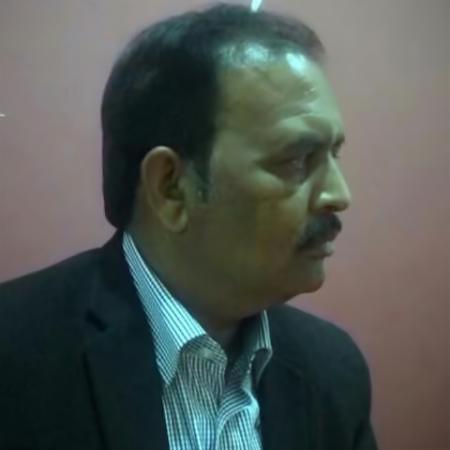
By Dr. Emanuel Adil Ghouri
The media is considered the fourth pillar of the state and plays a key role in shaping positive public opinion. Today’s media has become extremely powerful; it even has the ability to influence or overturn decisions made in parliament. It not only identifies the country’s political, social, economic, and religious problems but also suggests measures to address them.
According to the Pakistan Electronic Media Regulatory Authority, there are ninety‑six TV channels in Pakistan, of which thirty‑seven are news and current affairs channels. In their news coverage, commentaries, and talk shows, these channels focus almost exclusively on the problems of the Pakistani majority and their solutions, showing little concern for the approximately ten million minorities living in the country. Although the media does report atrocities and injustices committed against minorities—such as the demolition of Christian homes and the burning of churches—these incidents are often highlighted merely to increase ratings. Beyond such tragedies, minorities face political, social, and religious challenges that the media could address to draw the government’s attention toward meaningful solutions.
Sindh faces a serious problem of kidnapping, forced marriage, and religious conversion of Hindu minor girls, and Punjab faces similar issues involving Christian and Hindu minor girls. According to information provided by the Catholic News Agency and other social organizations, about one thousand such incidents occur every year. Most police stations avoid registering these cases, yet the number of officially recorded cases still approaches one thousand. Similarly, the misuse of the blasphemy law is not only fatal for minorities but also leads to the destruction of entire settlements.
Politically, minorities are victims of democratic inequality. They remain deeply dissatisfied with the procedure for allocating specific minority seats, insisting that these seats should be filled through elections rather than selection. From 1973 to 2025, the number of reserved seats for minorities did not increase, yet the media never paid attention to these issues. It neither made them part of its news agenda nor invited Christian leaders to talk shows to understand their position. These are topics that international media outlets routinely cover in their news reports, commentaries, and discussions.
In recent days, Geo News journalist Shahzeb Khanzada has openly stated on his program that hundreds of Christians were killed and dozens of churches were burned between 2015 and 2025. Although he acknowledges this today, he had never previously highlighted these incidents in his investigations or discussions. Such revelations now appear aimed at boosting program ratings rather than benefiting minorities.
The media often promotes the idea of equal rights for minorities, but has it ever attempted to provide equal representation? Christians should be included in Independence Day programs, and their services should be acknowledged so that future generations understand that Christians fought on every frontline of Quaid‑e‑Azam’s struggle for Pakistan.
Although August 11 is officially celebrated as National Minorities Day, national media outlets provide no special coverage, nor do they organize talk shows to mark the occasion. This attitude reflects a clear lack of interest in minority communities.
The Institute for Research, Advocacy and Development conducted an investigative review titled How Does the Pakistani Media Report on Religious Minorities? The report revealed that the positions and opinions of minority communities are often excluded from news coverage about them.
Dr. Tauseef Ahmed, former head of the Department of Mass Communication at the Federal Urdu University, notes that the issue of forced religious conversion of Hindu and Christian girls in Sindh and Punjab is not being discussed by the Urdu media, especially TV channels. He adds that discrimination—constitutional, legal, and traditional—is also ignored because the constitution does not provide equal rights for all citizens, and demands for equality are rarely highlighted.
National media in Pakistan plays a mixed role in addressing minority issues. At times it highlights violence and forced conversions, but it also perpetuates stereotypes and fails to provide consistent or balanced coverage. While the media can raise awareness about minority rights and events, it often prioritizes political news and neglects the daily challenges, discrimination, and stereotypes faced by religious and other minority groups.
Due to the lack of representation of minorities and vulnerable groups—and the influence of specific political agendas—the Pakistani national media has not maintained impartiality. As a result, Pakistan ranks 157th out of 180 countries on the World Press Freedom Index.
The government and key stakeholders should cooperate and take immediate remedial measures to protect the rights of minorities and bring them into the socio‑political mainstream, supported by a more sensitive and professional media.
Leave a Reply